Context
splitEV is a Series A startup and Techstars alum building an EV-charging product with a driver side and a host side. It was a client of B'More Designful, the venture studio I co-founded, and we were its founding design partners across the mobile app, the web app, and the marketing website.
I led product strategy, user research, and user testing. I worked with the founder and with an offshore engineering team, redesigned the onboarding flow, and worked on the host-side experience.
Constraints
- The launch date was set for March 2025 and then pushed back repeatedly.
- Beyond internal users, we couldn't reach real users except through what the founder was comfortable with, so we sourced our own testers and leaned on the founder's feedback for direction.
- An offshore engineering team, so handoff had to be unambiguous.
Problem
When we arrived, many screens had been designed in isolation. The user flows had been built independently of each other, so the app had no cohesive experience and no shared design system. That's a problem for an engineering team that has to build it, and for a driver who has to use it.
North starOne connected product that engineering could build without guessing how the flows fit together.
Decisions
Connect the flows before polishing screens
- Options
- Polishing each screen where it stood, or mapping the whole product first.
- Chose
- Join the separate flows into one cohesive app the development team could build from.
- Didn't build
- More one-off screens.
- Cost
- Weeks spent on structure before any screen looked better.
Cut steps and redo onboarding
- Evidence
- The first-run flow was where the disconnected design was most visible.
- Chose
- Reduce the number of steps in key flows and redesign onboarding.
- Cost
- Fewer steps meant deciding what to defer or drop, which needed the founder's agreement.
Standardize one design system
- Chose
- Consolidate the visual language and components across the mobile app, web app, and marketing site, and revamp the screens on top of it.
- Cost
- Some existing screens had to be redrawn to match.
Test with the users we could find
- Options
- Waiting for access to real customers or sourcing our own testers.
- Evidence
- No access beyond internal users and what the founder allowed.
- Chose
- Run RITE testing (rapid iterative testing and evaluation) with users we recruited ourselves, fixing problems between sessions instead of at the end.
- Cost
- Our testers weren't necessarily the eventual customers.
Solution
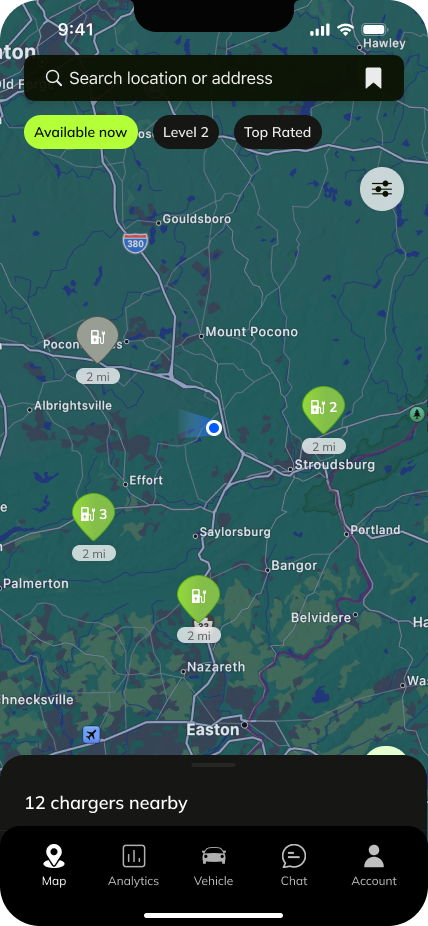
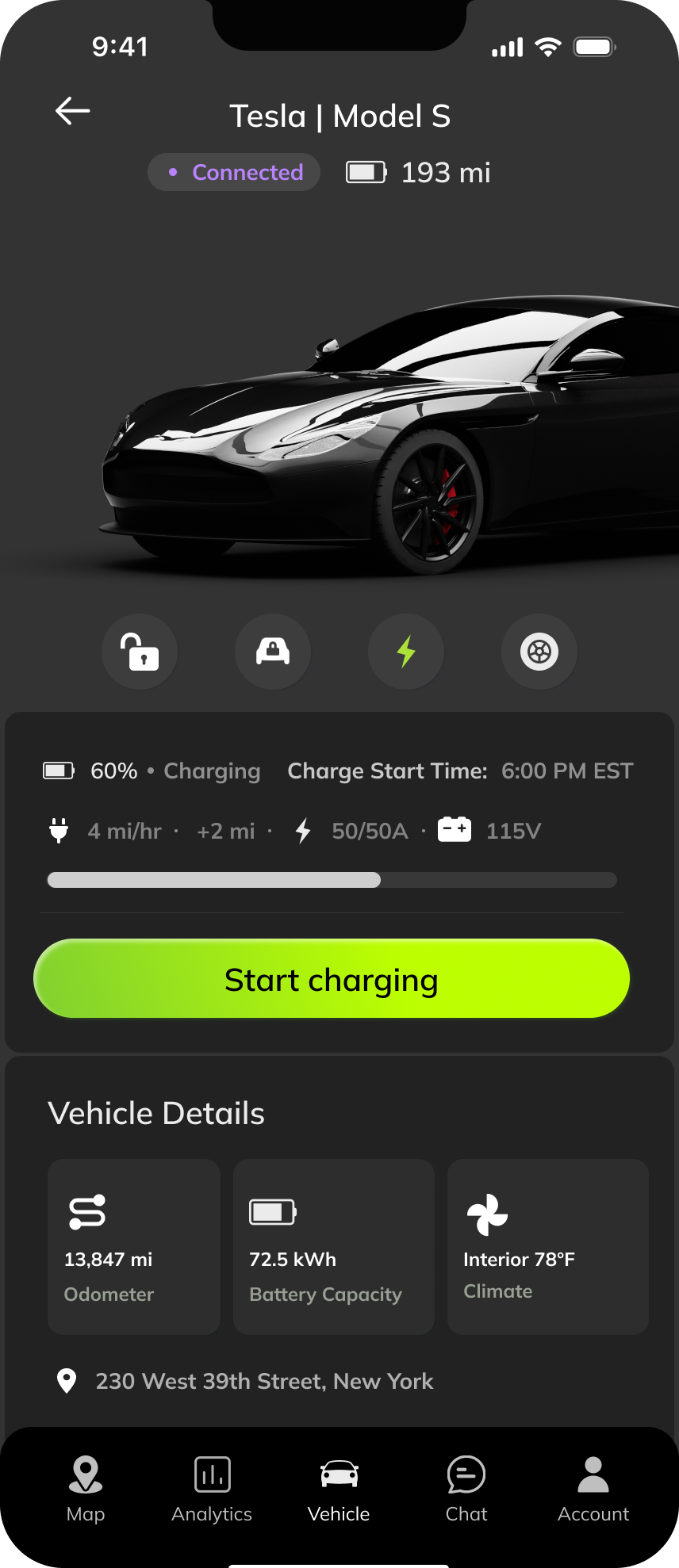
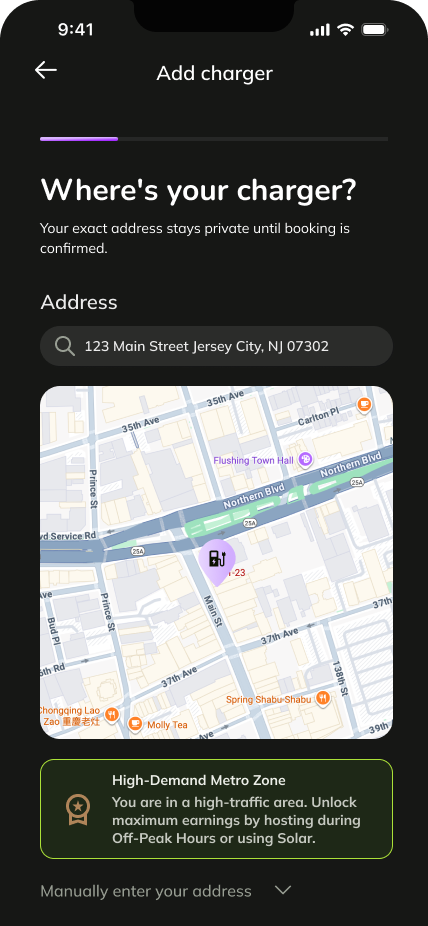
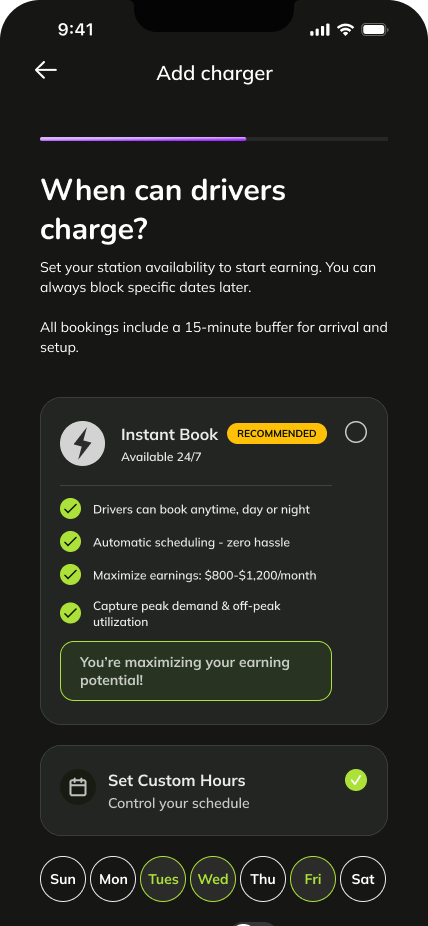
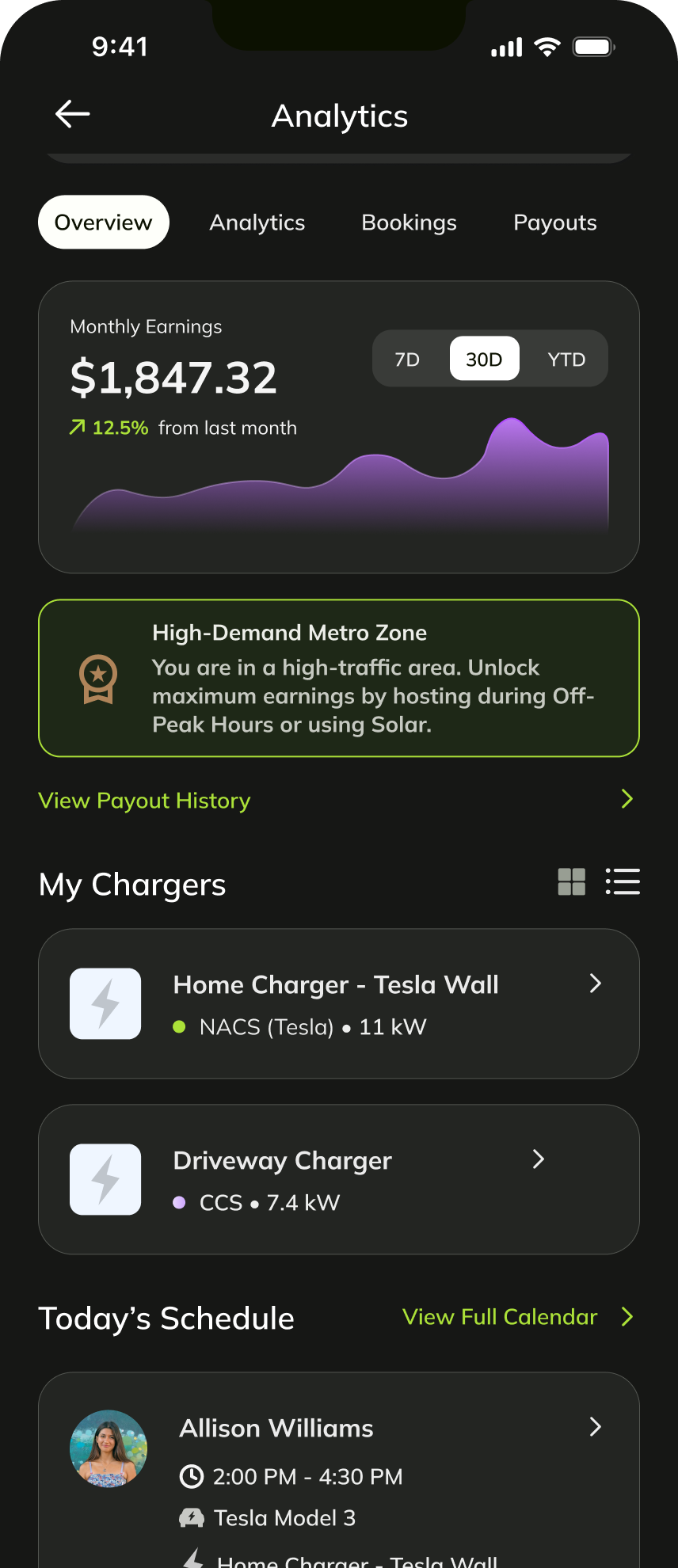
The deliverables were a connected set of flows for the mobile app, a shared design system used across mobile, web, and the marketing site, a redesigned onboarding flow, and a rebuilt host-side experience, covering sign-in and sign-up, vehicle management, maps, station search, filtering, and station detail.
Outcome
The app now had one set of connected flows, shorter paths through key tasks, and a design system engineering could build from. I don't have launch metrics to report. The launch date kept moving, and much of what we learned came from our own recruited testers.
Do differently
- Push for a smaller first release with a fixed date, instead of a bigger launch that keeps slipping.
- Set up a standing panel of real drivers and hosts early, so research didn't depend on what the founder was comfortable sharing.
- Agree with the offshore team on how design tokens and components reach code, so the shared design system stays shared after handoff.